Panch Pokhari/Helambu/ Langtang/Ganesh Himal Trekking
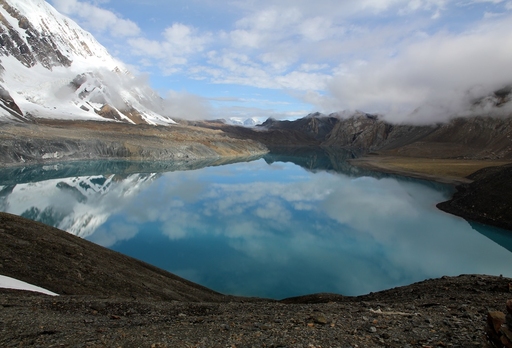
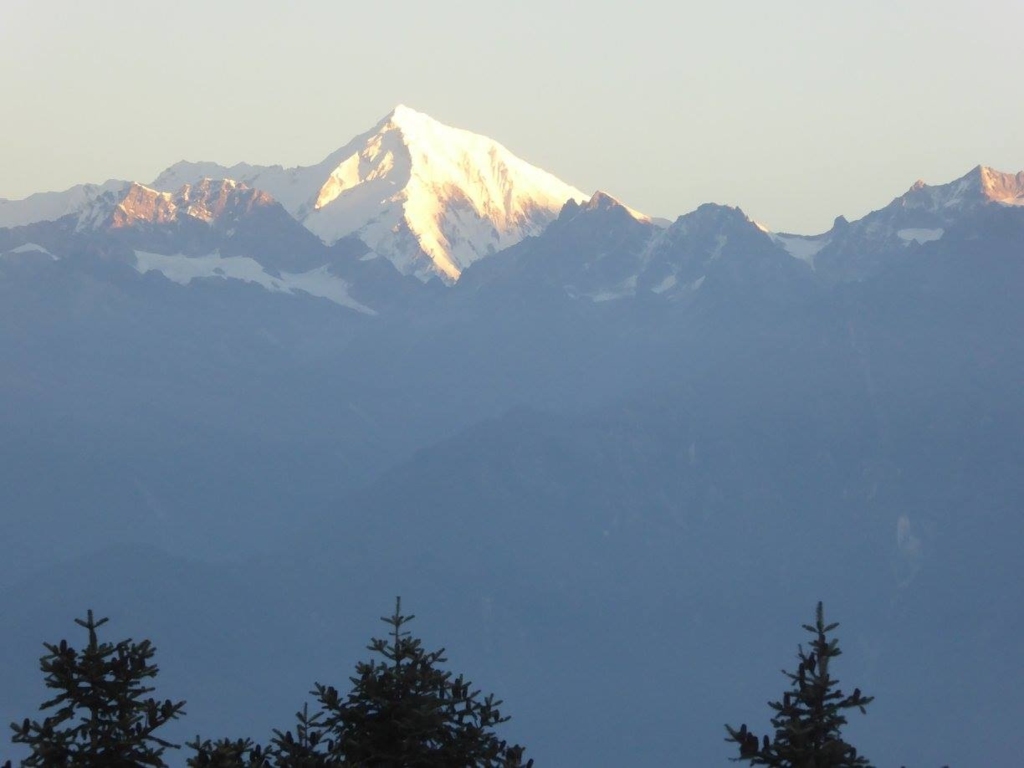
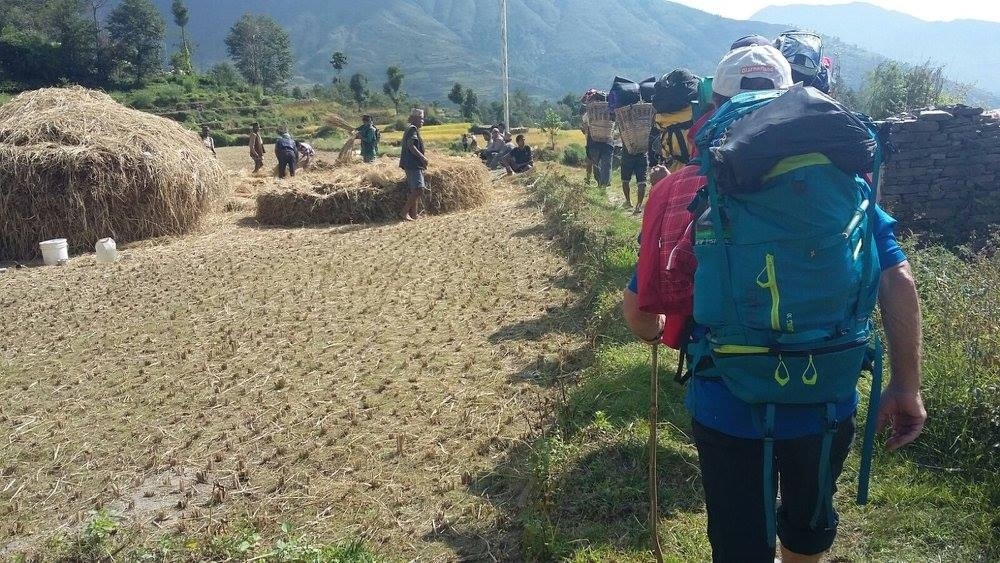
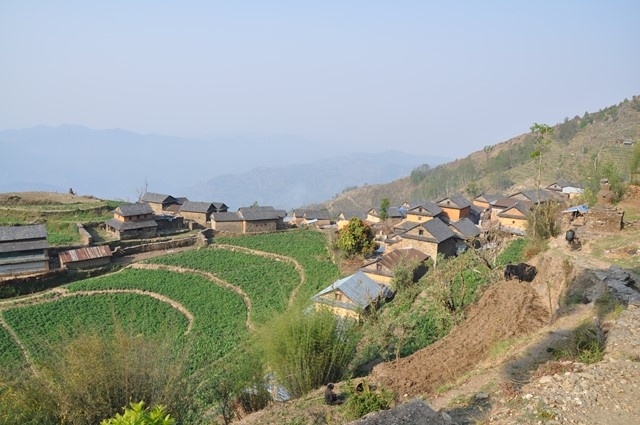
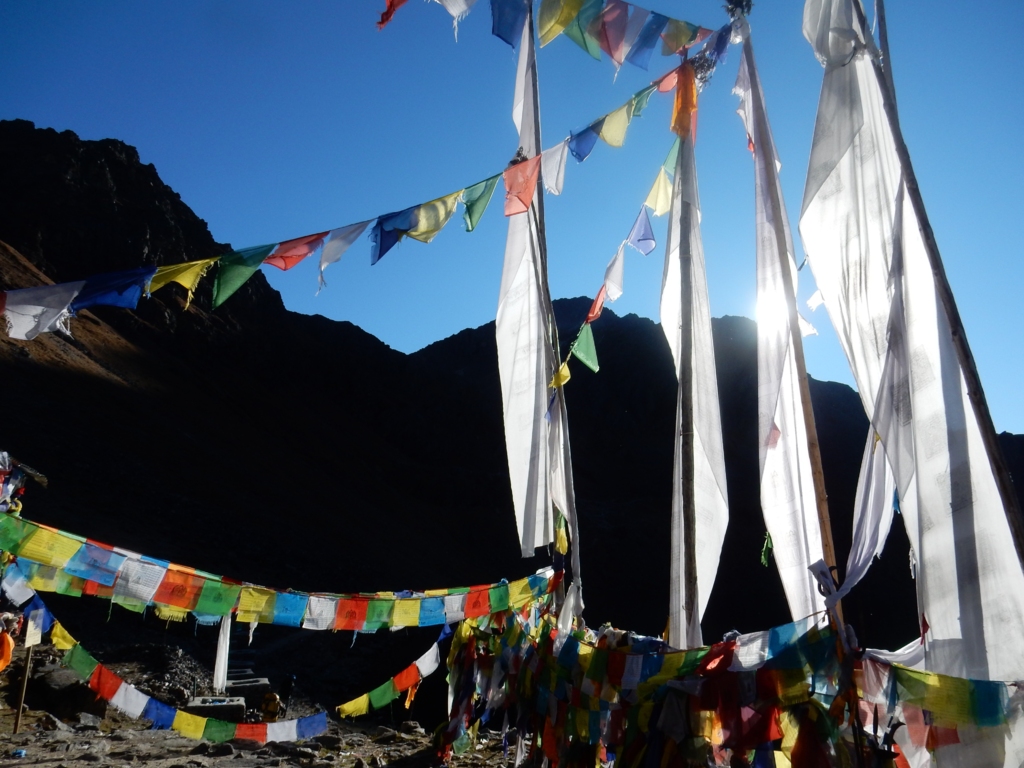
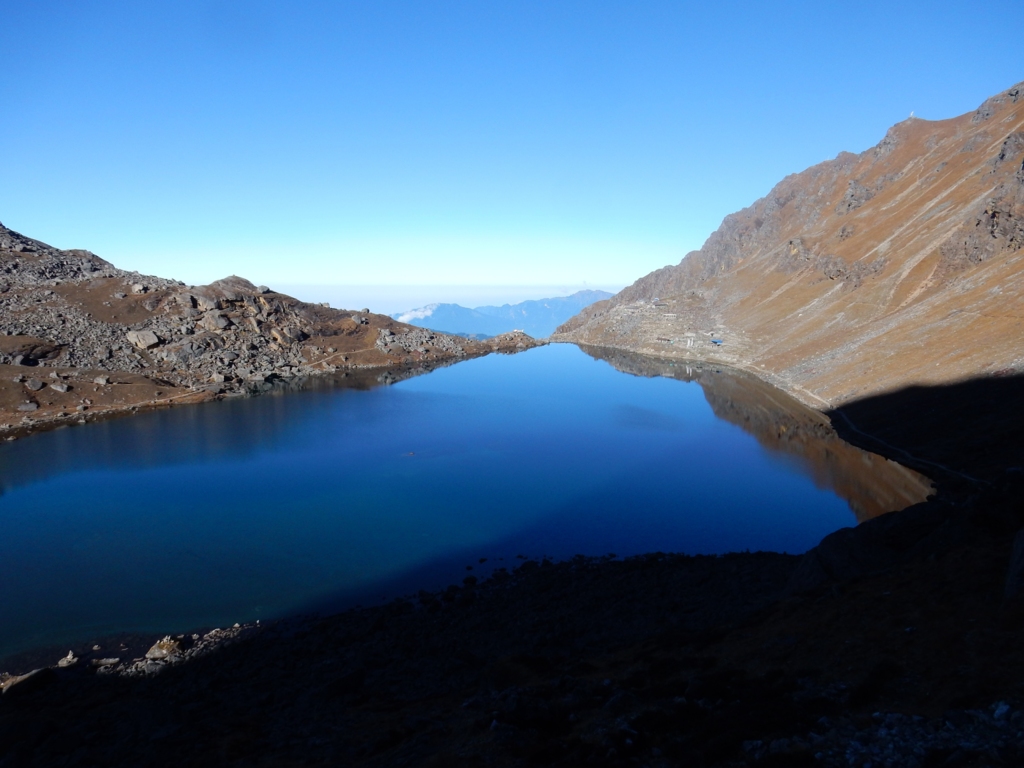
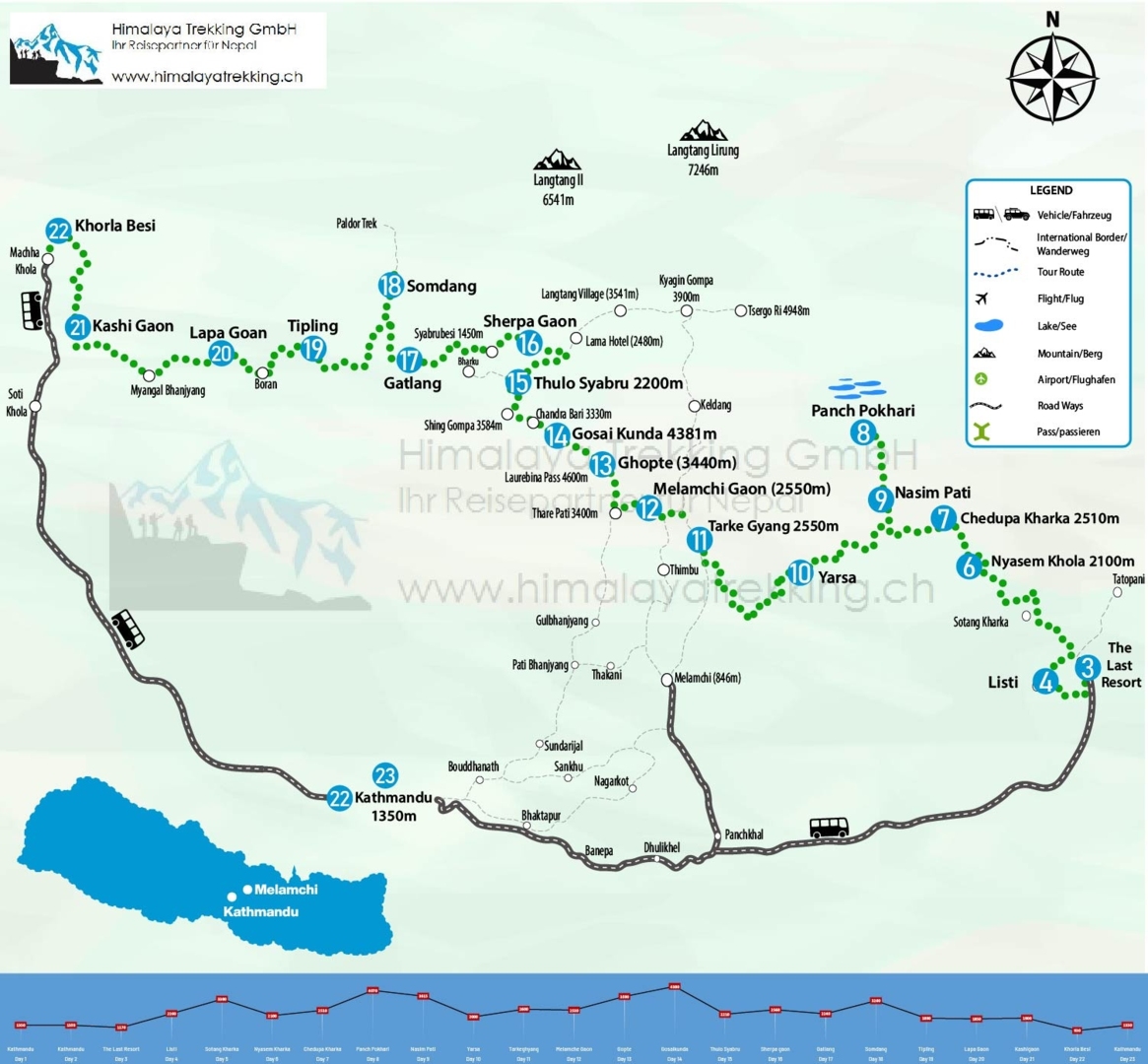
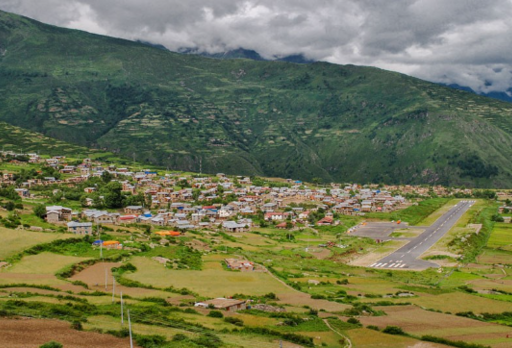
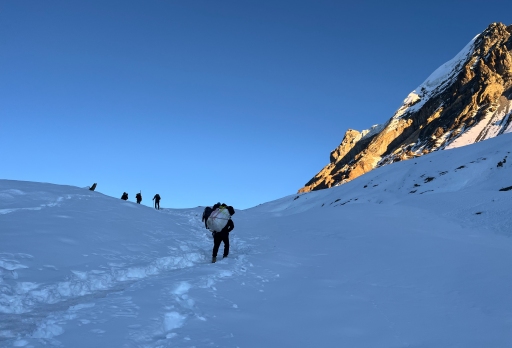
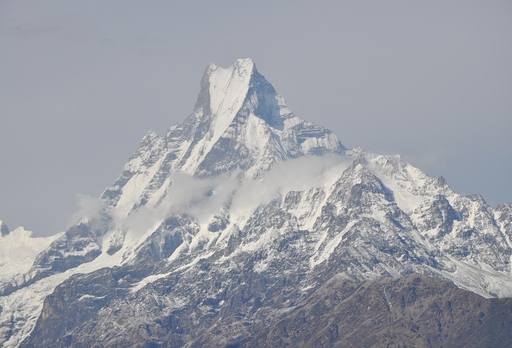
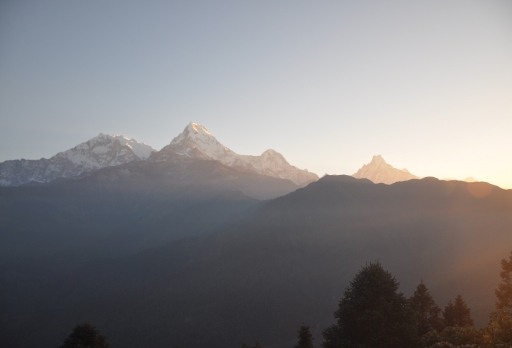
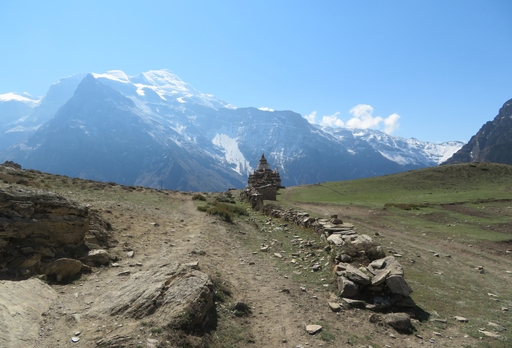
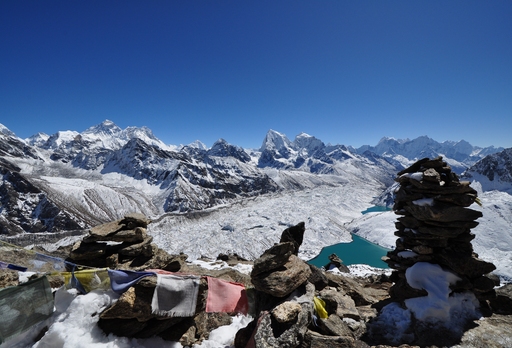
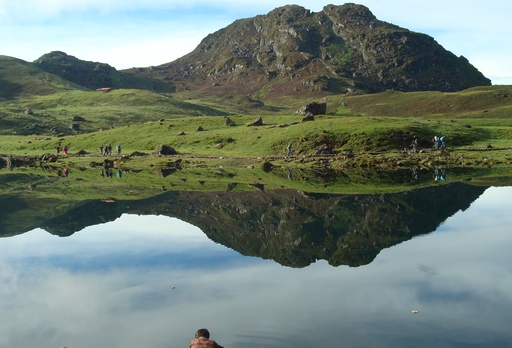
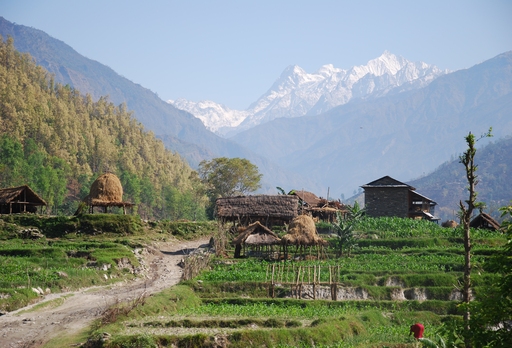
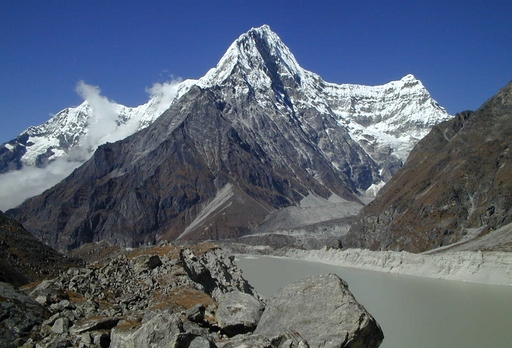
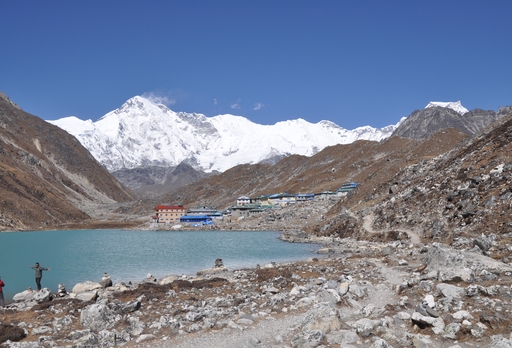
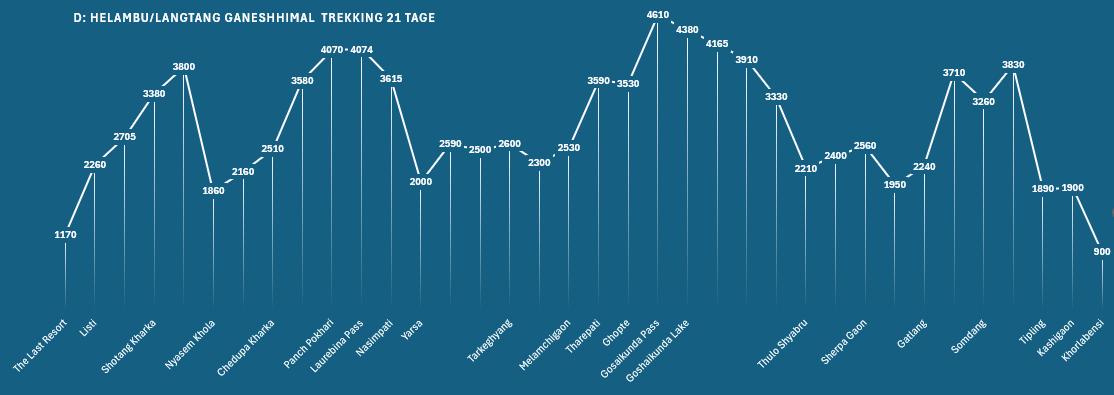
The Panch Pokhari Helambu Trekking is a popular trekking route that leads from The Last Resort to Gosainkunda. The route offers a unique combination of cultural experiences and breathtaking natural beauty. The trek begins at The Last Resort, a popular starting point for adventure sports such as bungee jumping and rafting. From there, the trail winds through picturesque villages and terraced fields inhabited by Sherpa and Tamang communities. During the trek, one has an opportunity to learn about the local culture and stay in traditional teahouses. The route continues to Panch Pokhari, a group of five sacred lakes known for their religious significance and natural beauty. The lakes are situated at an altitude of about 4,100 meters and offer spectacular views of the surrounding mountains and valleys. From Panch Pokhari, the trek proceeds to Gosainkunda, a sacred lake revered for its religious importance to Hindus and Buddhists. The lake is located at an altitude of about 4,380 meters and provides breathtaking views of the surrounding mountains, including Langtang Lirung at 7,227 meters.
1. Day - Arrival in Kathmandu
Transfer from the airport to the hotel and time at your own disposal.2. Day - Sightseeing Kathmandu
3. Day - Drive to The Last Resort. (1170 MASL.)
25. Day - Depature Kathmandu
- Flexible daily routine
The daily routines described must be considered somewhat flexible, as they are adapted to local conditions (weather, new paths, etc.) as well as to your constitution. Your guide will plan and discuss the next day with you in the evening.
Nature Trails / JeepsOn the whole trek, a natural road has been built. However, you rarely encounter vehicles. This is actually an advantage for us, as you can compensate for possible flight delays with a jeep and still achieve the goal.
Include
- 2 nights Hotel in Kathmandu with breakfast
- Pick up and Drop service
- Kathmandu sightseeing
- All Transportation connecting to Trekking
- Meals and Accommodations during the Trek
- Trekking Guide
- Porters
- Trekking permit.
- Satellite Telephone
- Trekking insurance for trekking Crew
- Trekking bag of Himalaya Trekking
Exclude
- International Flight to Kathmandu and back
- Tips
- Meals in Kathmandu
- Aditional Accommodations in Kathmandu
- All drinks
Requirements
You will find the level of difficulty and the type of accommodation of each journey in the program.
Equipment
You are going to get an equipment list as recommendation together with your travel documents. The equipment for a tent trekking (tent, mattresses etc.) will be organized locally.
Luggage
You are allowed to check in 20 kg as well as you can take 5 kg of hand luggage with you. If you would like to travel with a trolley case, we kindly ask you to take an additional big backpack with you. Luggage which you do not need while trekking can be deposit for free in Kathmandu.
Entry
For the entry to Nepal you need a passport which is valid further than 6 month after your departure date. You will receive your visa upon your arrival at the airport in Kathmandu. You will be told about the visa expenses while booking, since the fee changes from time to time.
Health
Himalaya Trekking suggests seeing your doctor or a tropical doctor as early as possible so you will be informed about current provisions regarding injections. Pharmacy or a doctor will help you regarding your personal trip first aid travel kit.
Group size
Himalaya Trekking guarantees for every tour. We do not have any minimum size for a group, but we do have a maximum of 12 persons per tour.
Tour program
The daily program should be seen as very flexible since we have to consider the local circumstances as well as your physical condition. Your guide will plan with you every evening the next day.
Travel documents
You are going to receive the detailed travel documents with general information as well as your flight tickets 2 to 3 weeks before departure.
Tipping
The tip for the local guides and carrier are not included in the travel costs. It is common to tip them for a good performance.
Accommodation and meals
The overnight stays in Kathmandu and Pokhara will be in a middle class hotel. The restaurants can be chosen individually, as lunch and dinner are not included in the travel costs.
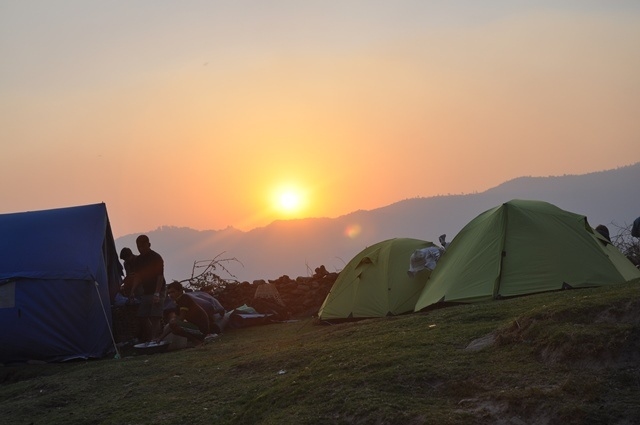
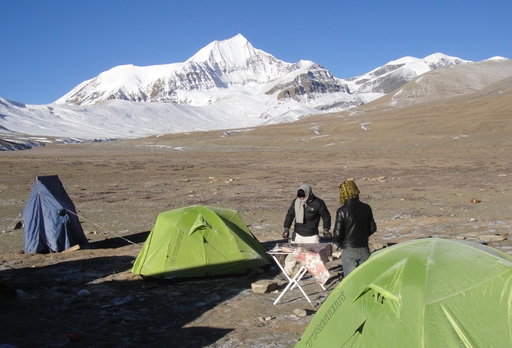
During a lodge trekking the hike will be trough village to village. You will stay overnight in a basic hostel and you are going to have your meals there or in a restaurant on the way. During the camp trekking you are going to stay in one man or two-person tents and all the meals will be provided by private cook.
Insurance
Himalaya Trekking recommends having travel insurance as well as a cancellation protection. We also recommend having a copy of your police with you.
Climate
The weather in Nepal is nice. The summer is together with the monsoon season from June to October, the rest of the year is dry. There is mild climate in the Kathmandu valley, during the summer time around 20-30°C and in the winter time around 0-15°C.
Please consider the climate for your travelling plans, since the county covers a height form 75 MASL to 8848 MASL. Therefor the climate changes and if you are in the wrong place to the wrong time you will probably not see the Himalaya. However there still is a suited journey for every time period!
Kontinent : AsienLandesgrenze : Im Norden: Himalaya (Tibet /China), Im Süden, Osten und Westen: Indien Lage : 26°20'- 20°26' Längengrad
80°03'- 88°26' BreitengradEinwohner : ca.29 Millionen Hauptstadt : Kathmandu (1350 M. ü. M) ca. 4 Millionen Einwohner Höchster Punkt : 8848 M. ü. M. (Mount Everest) Tiefster Punkt : 75 M. ü. M. (Terai) Baumgrenze : ca. 4500 M. ü. M. Schneegrenze : ca. 2500 M. ü. M. im Winter Himalaya (Berge) : 15% des Landes über 3000 M. ü. M. Hügelland : 68% des Landes 500 M. ü. M. - 3000 M. ü. M. Terai(Flachland) : 17% des Landes unter 500 M. ü. M. Tiere : Tiger, Nashorn, Elefant, Panda, Schneeleopard, Kuh, Yak, Wasserbüffel, 800 verschiedene Vogelarten, je nach Höhe Religionen
: Hindu 85%
Buddhisten 10%
Moslem 3%
Sonstige 2%Kasten : Brahmanen
Tschetri
Baishja
Sudra (Unberührbare)
61 verschiedene VolksgruppenSprache : Nationalsprache ist Nepali
Über 70 weitere lokale Dialekte und Sprachen
Englisch ist obligatorisch in der SchuleAnbau : Reis , Hirse, Buchweizen, Weizen, Kartoffeln,
Bananen, Mango, Ananas, Äpfel und viele andere Früchte und Gemüse je nach Temperatur und HöheTextil : Pashmina und Wollproduktion aus Yak Wolle Haupteinkommen : Agrar-Wirtschaft, Tourismus und Auslandarbeit. 
Inquiry